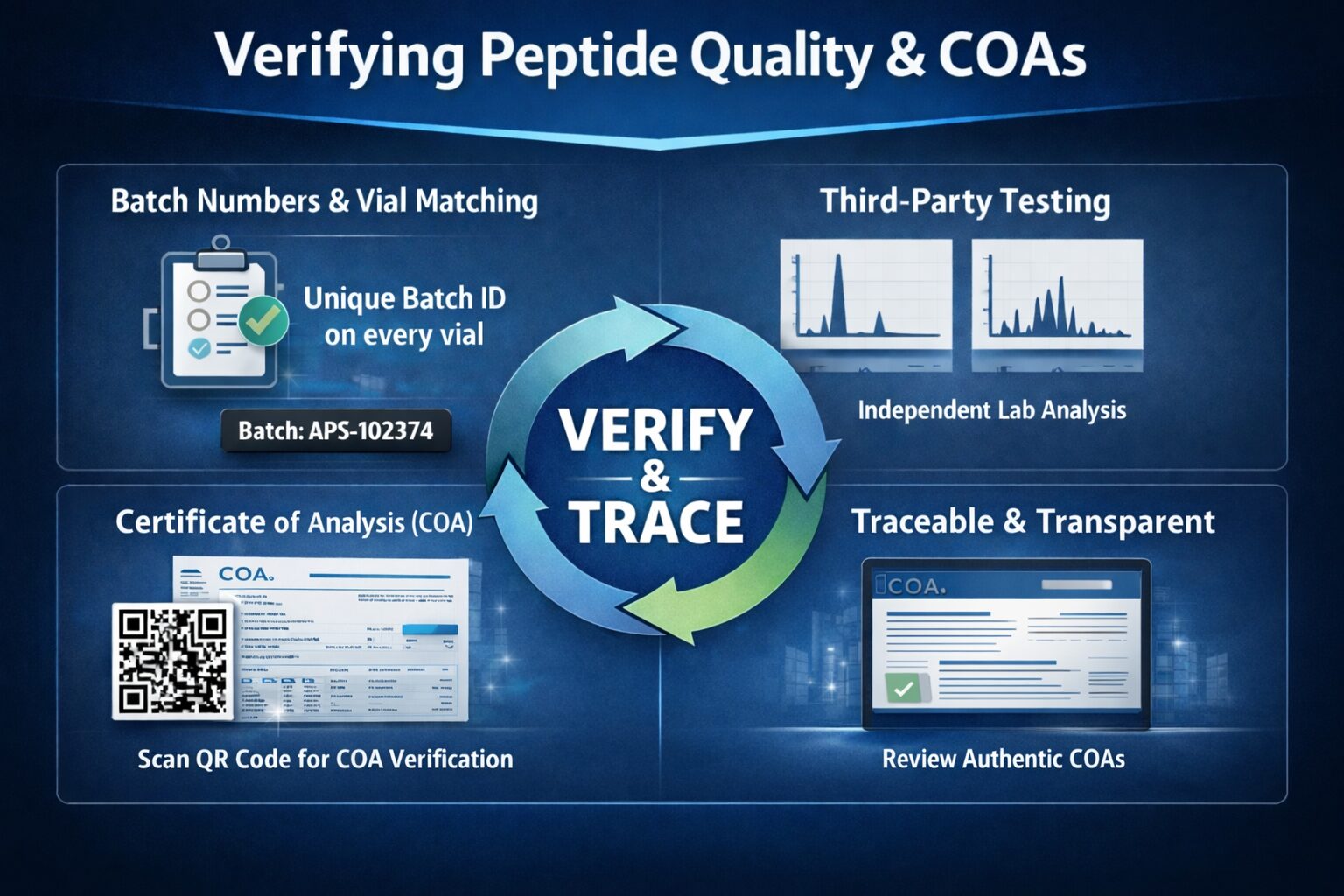
Rp-hplc Peptide Pureness Analysis
Air Conditioning Peptide Testing Labs Third-party Peptide Evaluation HPLC technique growth is called for at each phase of medicine R&D, starting from the early exploration phase. Throughout this phase, the HPLC technique can be developed utilizing a common protocol as the medicine is being examined at a greater concentration and only semi-quantitative worths are needed. Naturally, this fit-for-purpose approach helps decrease the HPLC examination expense dramatically throughout very early discovery studies.
How much does peptide HPLC testing expense?
The expense of peptide evaluation service differs significantly based upon which techniques your governing package requires: HPLC-UV Analysis: $& #x 24; 300 & #x 2013; & #x 24; 800 per sample (common pureness evaluation) LC-MS (Fluid Chromatography-Mass Spectrometry): $& #x 24; 600 & #x 2013; & #x 24; 1,500 per sample (molecular weight confirmation).
Powder Mixing And Granulation: Process Optimization For Production
By confirming molecular structure and pureness, we assist researchers preserve reproducibility and abide by governing Scientific Innovation criteria. Our analytical remedies provide self-confidence in every peptide set, minimizing speculative risk and sustaining both preclinical and professional applications where accuracy is vital for success. It is considered the gold-standard technique for evaluating just how much of a sample is the wanted peptide versus impurities [2] For example, a peptide at 95% pureness still has ~ 5% byproducts that can disrupt sensitive experiments if unseen [2] By utilizing HPLC to guarantee a peptide is, state, 98-- 99% pure, researchers substantially reduce the risk of such confounding variables.How Do We Identify Peptide Purity By Rp-hplc?
In peptide research, the high quality of your starting materials straight identifies the dependability of your results. High-Performance Fluid Chromatography, frequently referred to as HPLC, is the gold common analytical approach for analyzing peptide purity. Understanding what HPLC screening includes and why it matters is important understanding for any scientist collaborating with synthetic peptides.Why Purity Issues In Study
- NorthEast BioLab gives important insight, and are compliant with governing standards and industry best techniques.
- As soon as reconstituted in solution, many peptides should be utilized within 1 month when stored at 2-- 8 ° C, or aliquoted and icy for longer-term storage.
- A lot of laboratories begin with a fast chromatographic check and expand to mass spectrometry, amino acid analysis, or peptide mapping when much deeper characterization is needed.
- Amino acid series verification (MS/MS) validates that the peptide's series is correct.